People from Maramureș managed to provide for themselves for centuries — working with their own hands to create all they needed. Today, craftspeople here fall into two broad categories: the "survivors" — those rare artisans who, despite the flood of industrial goods, still practice their trade — and the "venturesomes" — the few young people willing to learn folk crafts, knowing that what they make will end up in tourists' homes rather than neighbours'. Even so, the preservation of crafts carries in Maramureș more spiritual weight than elsewhere, where traditional occupations have long retreated into the pages of local monographs.
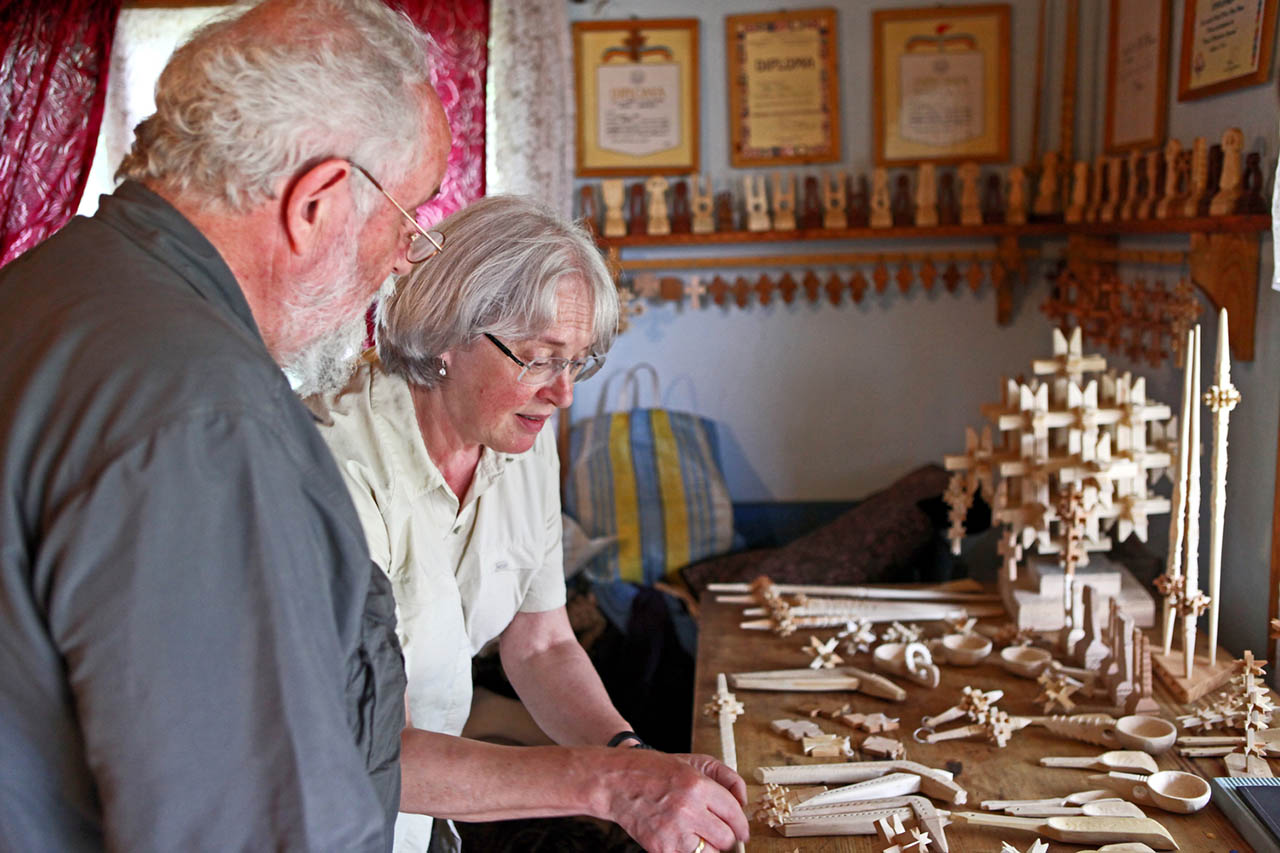
The wood crafts
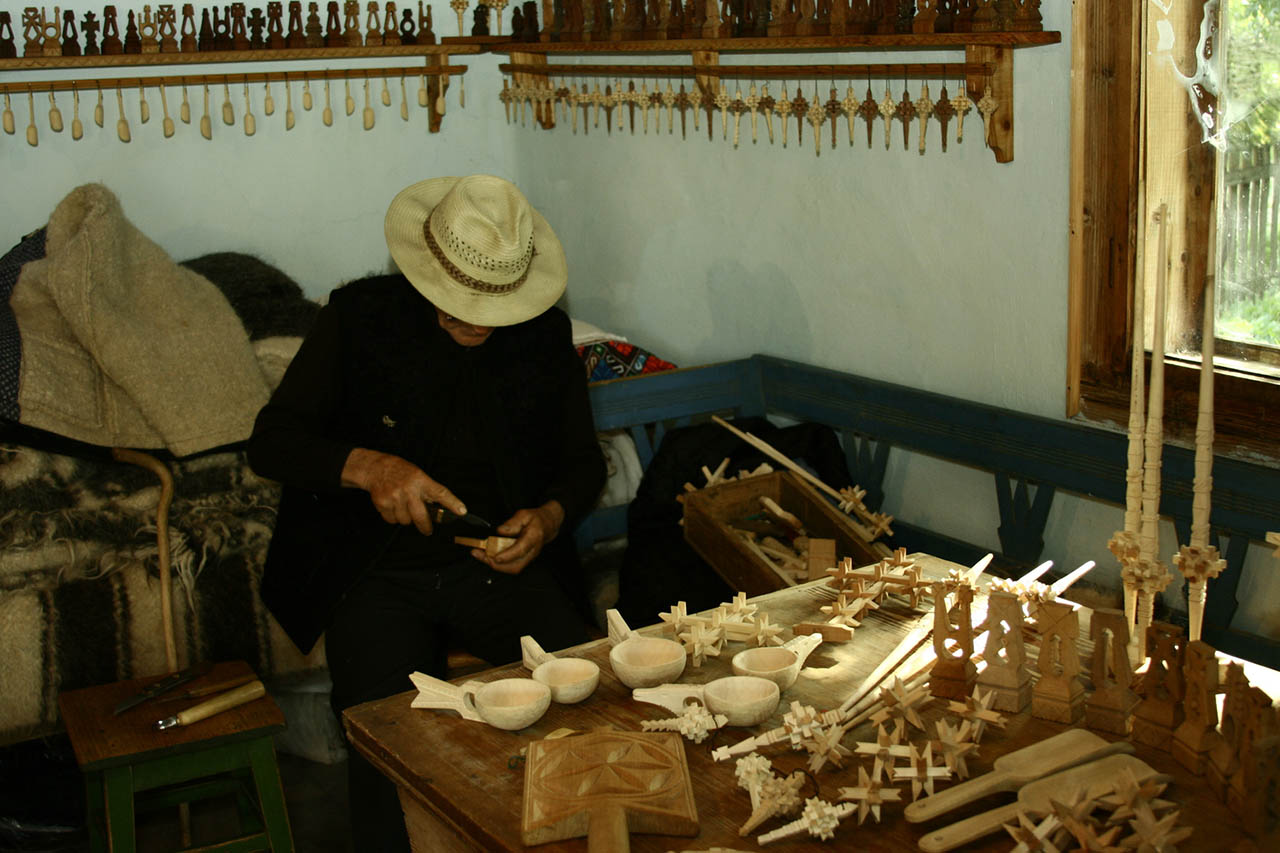
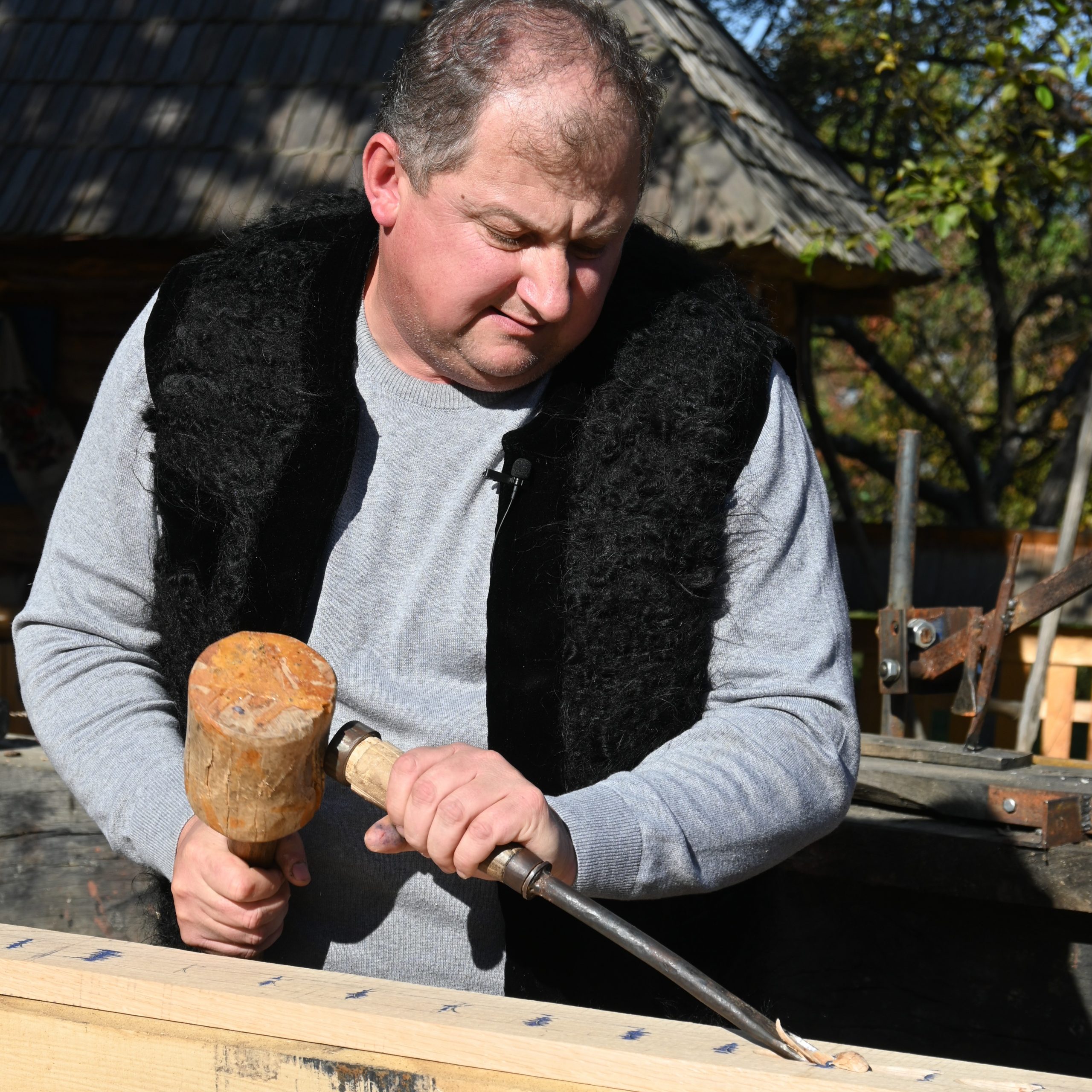
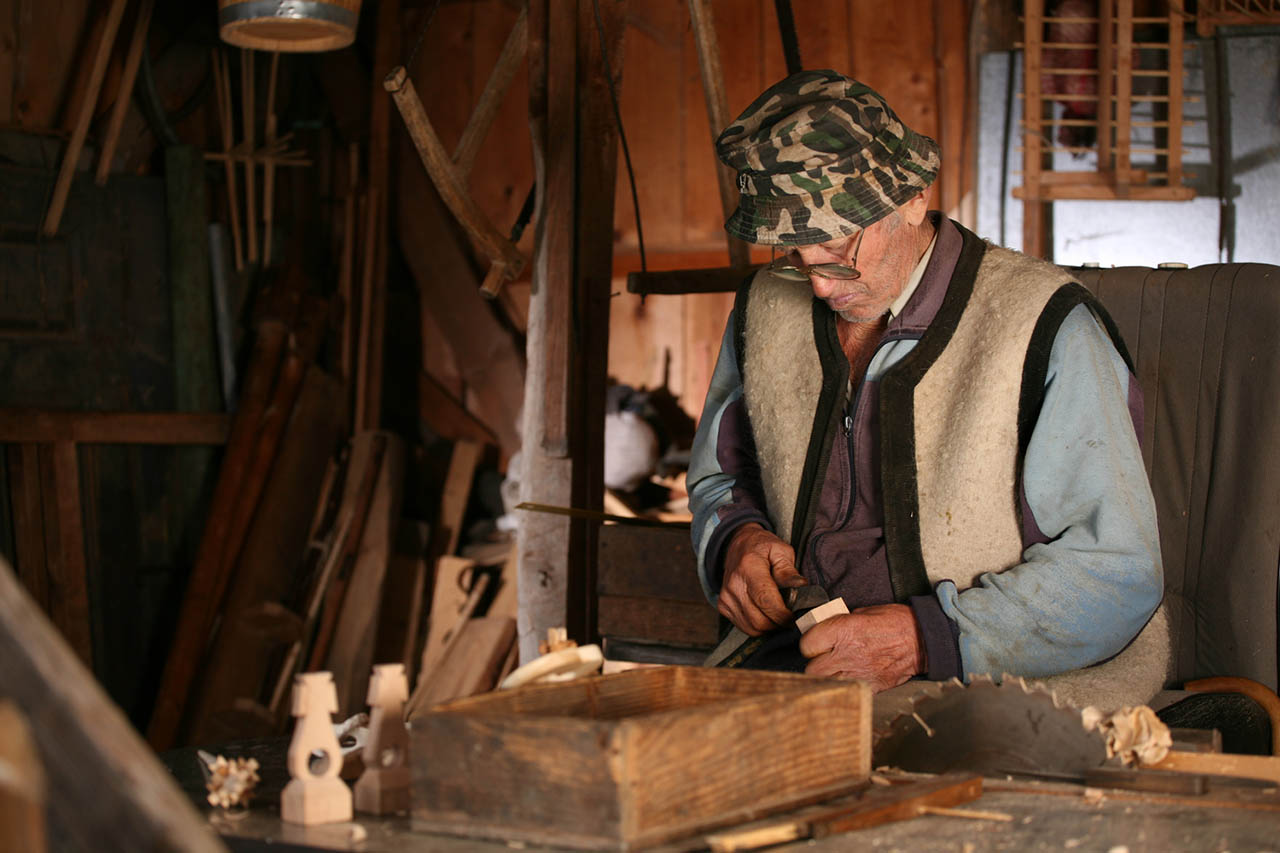
Wood and its processing have always carried a masculine sign in Maramureș, as elsewhere: joinery, cooperage, carpentry and shingle-making — all tied to the surrounding forests — were usually passed from father to son, or learned through apprenticeship.
Joiners transformed forest timber into beams and joists, the structural elements of houses and yard annexes, and of course the famous Maramureș carved gates. Coopers made barrels, vats, buckets and other household vessels. Carpenters used the drier autumn-cut wood to craft doors, windows, floorboards and furniture. Shingle makers, increasingly rare today, split fir wood into shingles (draniță or șindrilă), cut straight, pointed or rounded to the owner's taste. Every village had its craftsmen — most of them, it was known, in Sârbi. Nowadays the greatest concentration of wood craftsmen is found in Budești and Breb.
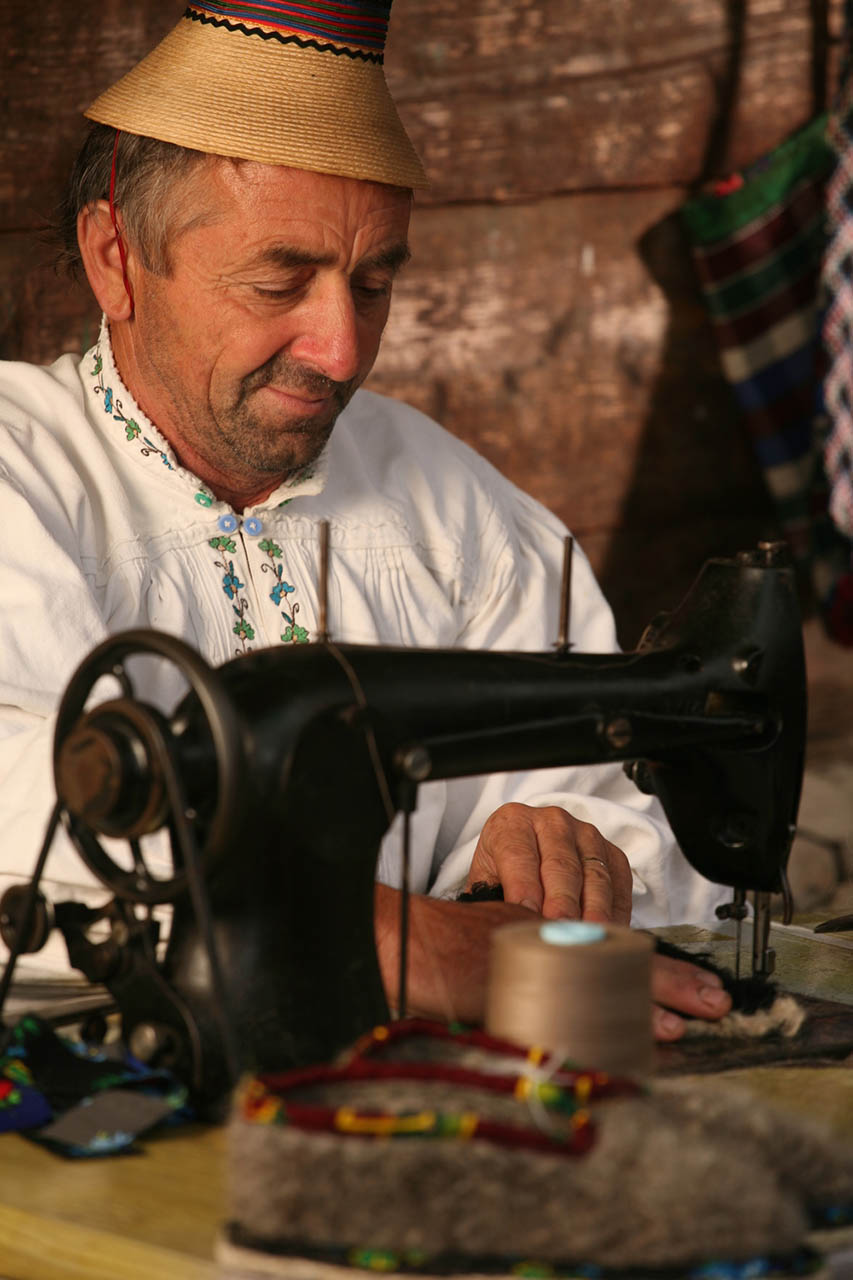
There were also tailors in every village — and in the historical Maramureș, tailoring was a male-dominated trade: men sewed the sheepskin coats, woollen waistcoats and trousers, and applied the meticulous embroidered ornamentation. Before Easter, Christmas and New Year, tailors entered their busiest season.
The women's crafts & traditional costume
Women dealt exclusively with spinning and weaving, arts they had learned since childhood at home — from mothers and grandmothers — or at the communal work gatherings (șezători). Girls also learned the unwritten rituals that governed work: which days were sacred and required prayer rather than the loom.
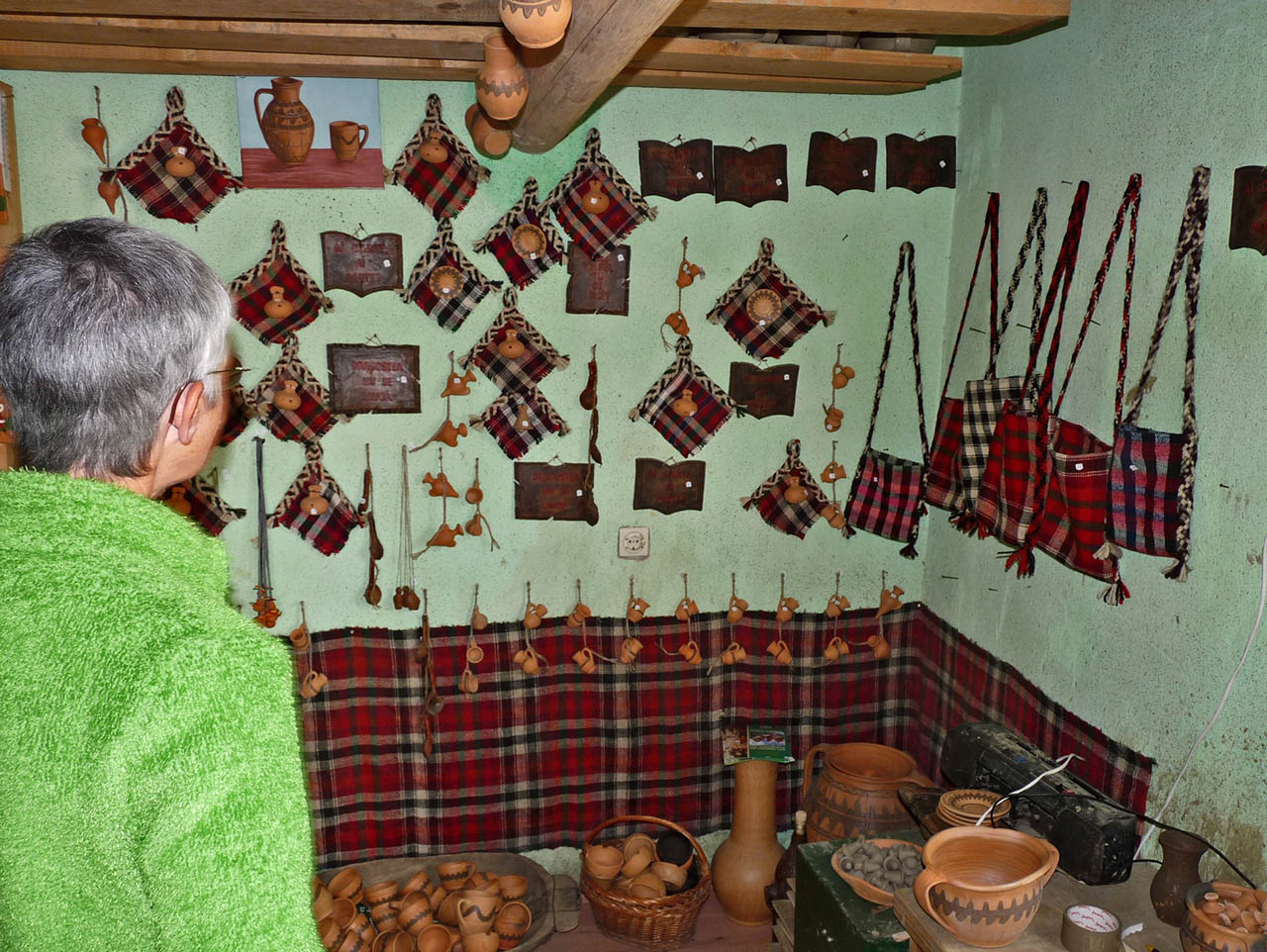
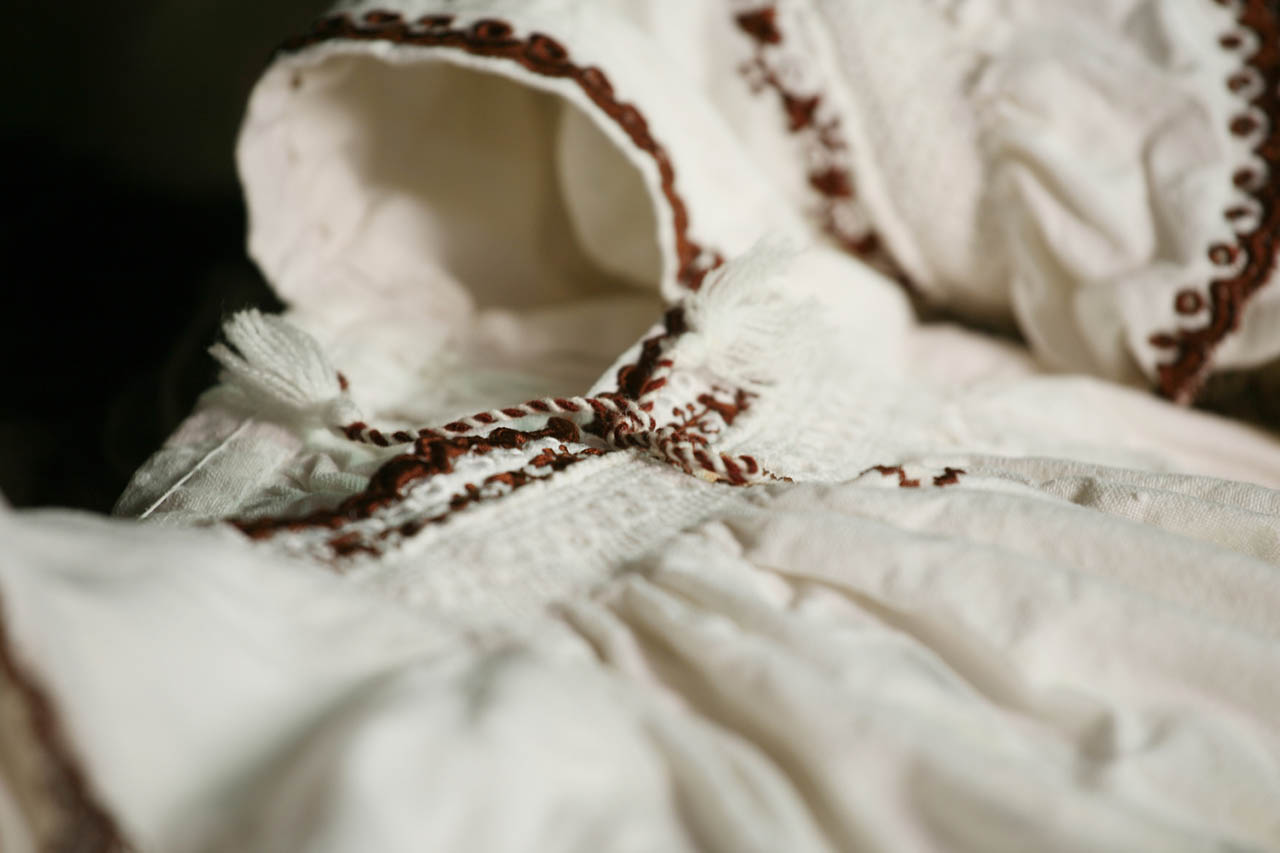
The shirts were made first, with great artistry: hemp cloth in ancient times, later replaced by cotton or flax. Each autumn, women harvested hemp; through winter they embroidered, so that by spring every man in the house had — as tradition required — two complete sets of shirts. Once the shirts were done, they turned to wool garments, ready before the cold arrived. Women also wove blankets, rugs, stockings and bags. Skilled needlework was a source of great pride; slovenly work brought shame and the sharp tongue of village gossip.
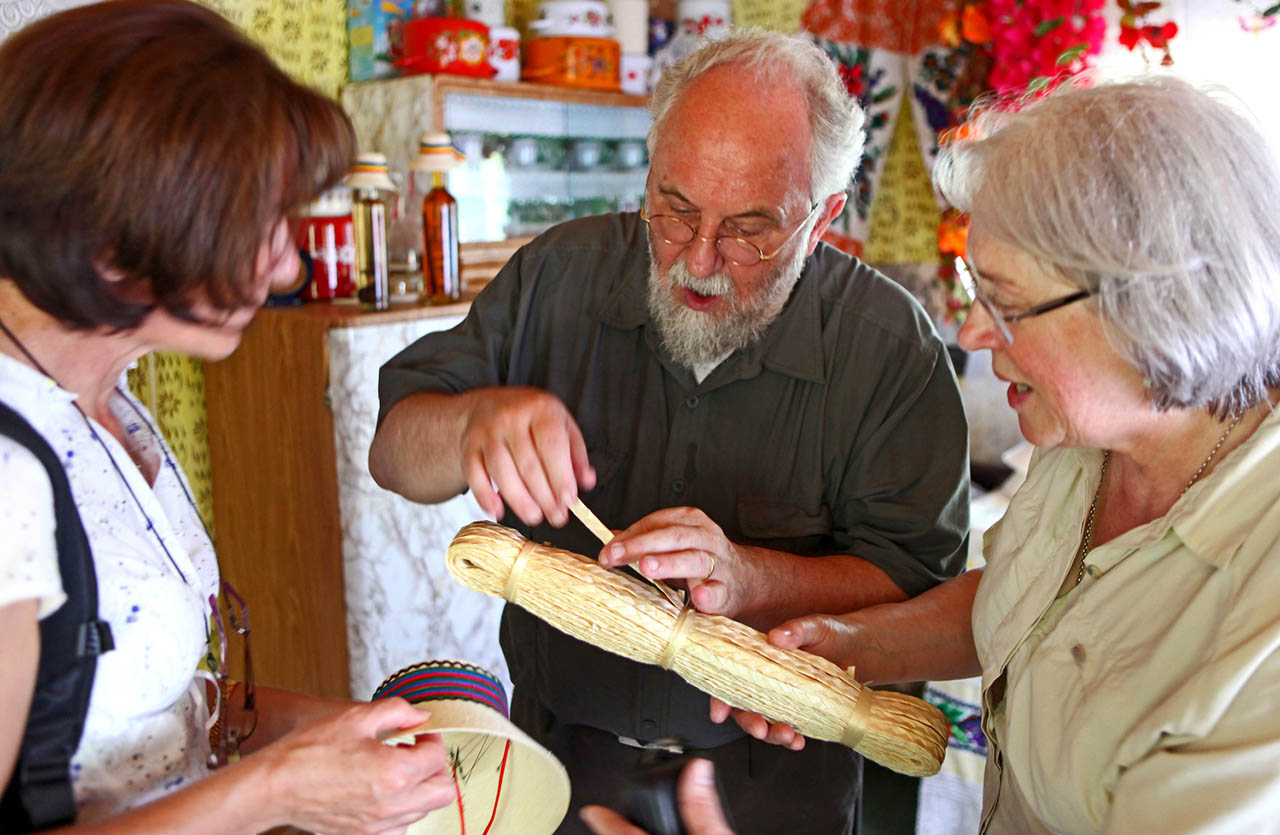
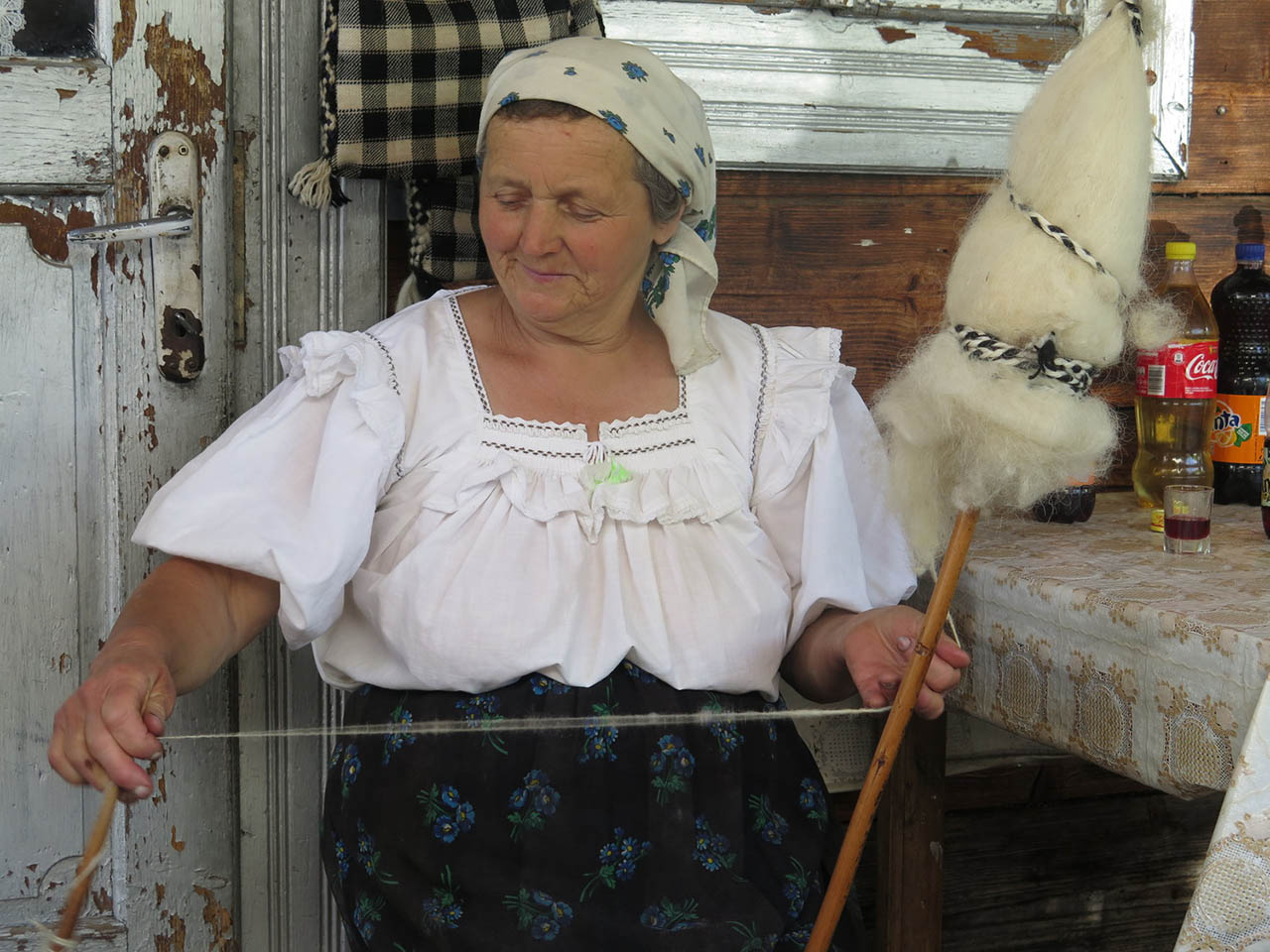
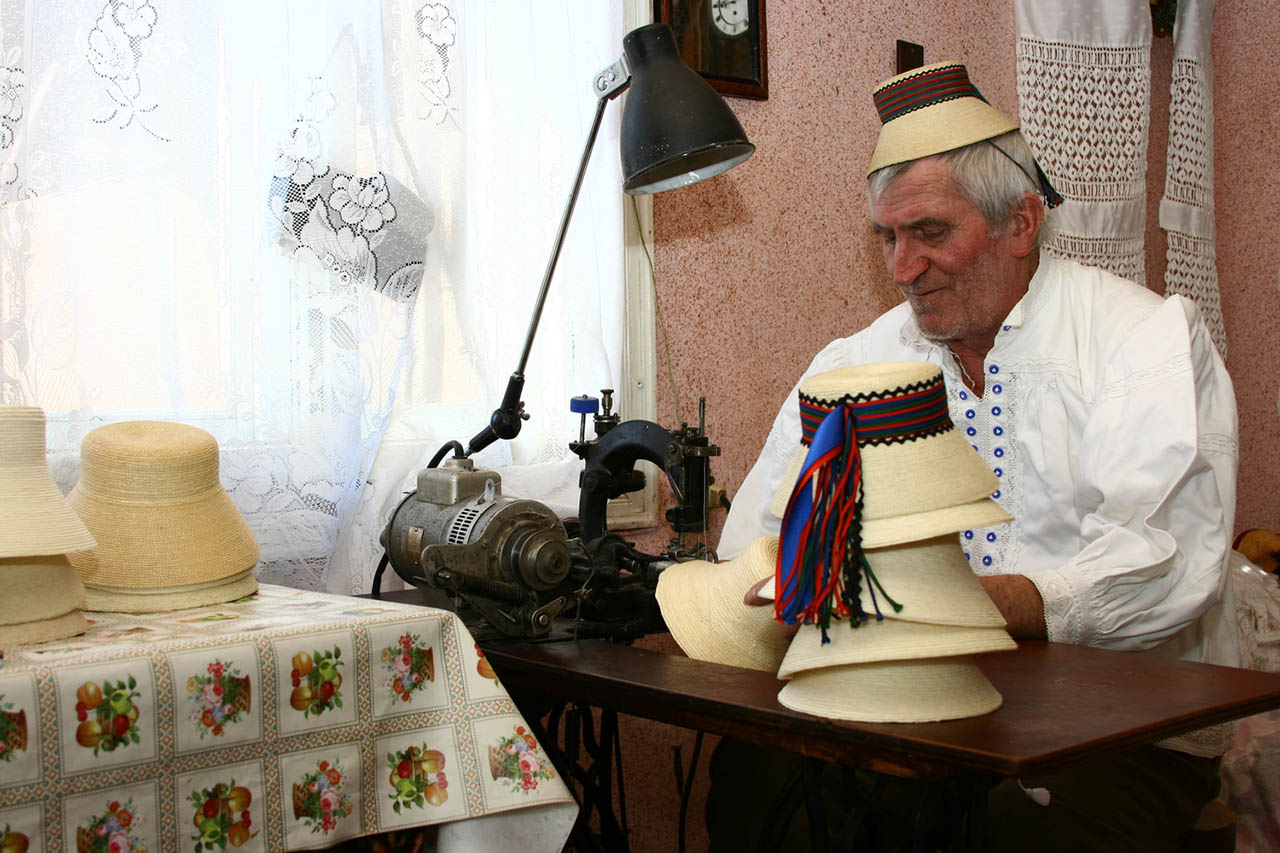
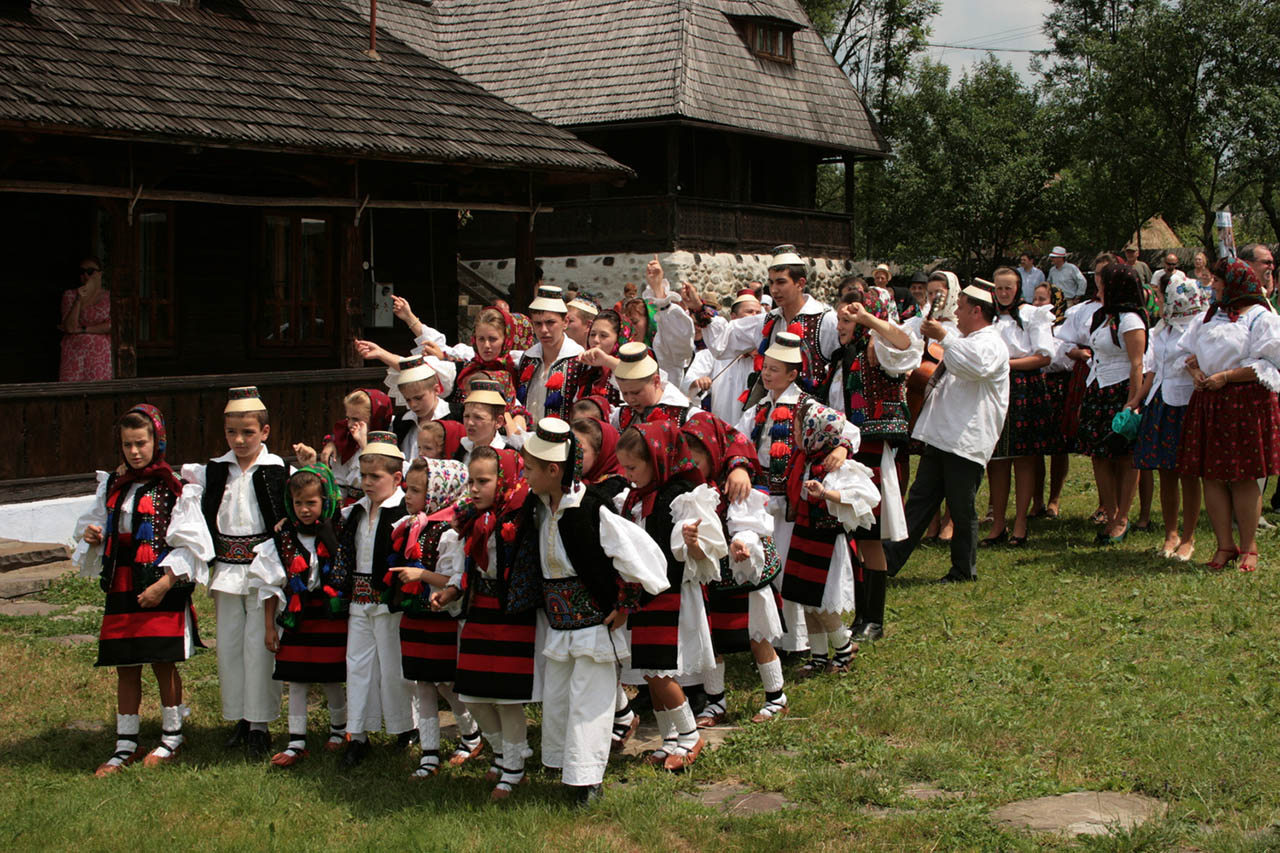
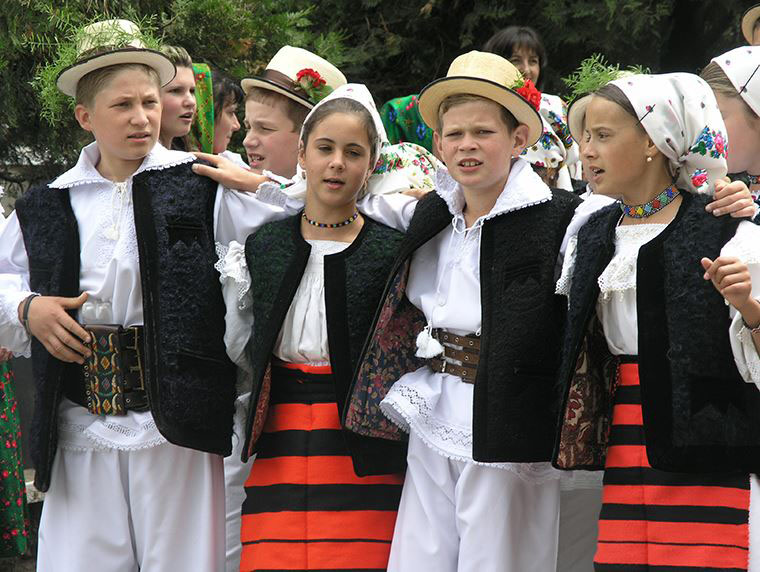
What we call "traditional clothing" today is made up of: a shirt (cămeșă), a waistcoat (pieptar — white for elders, black or bicolour for the young), cioareci (men's trousers) or sugnă (women's floral outer skirt), the white poală underneath, and the zadie — the distinctive rectangular woollen apron of Maramureș, with its alternating horizontal black and red stripes you will certainly recognise from photographs. Finally, a pair of sturdy opinci — sandals made from cowhide or, more recently, rubber.
Visit the traditional craftsmen →