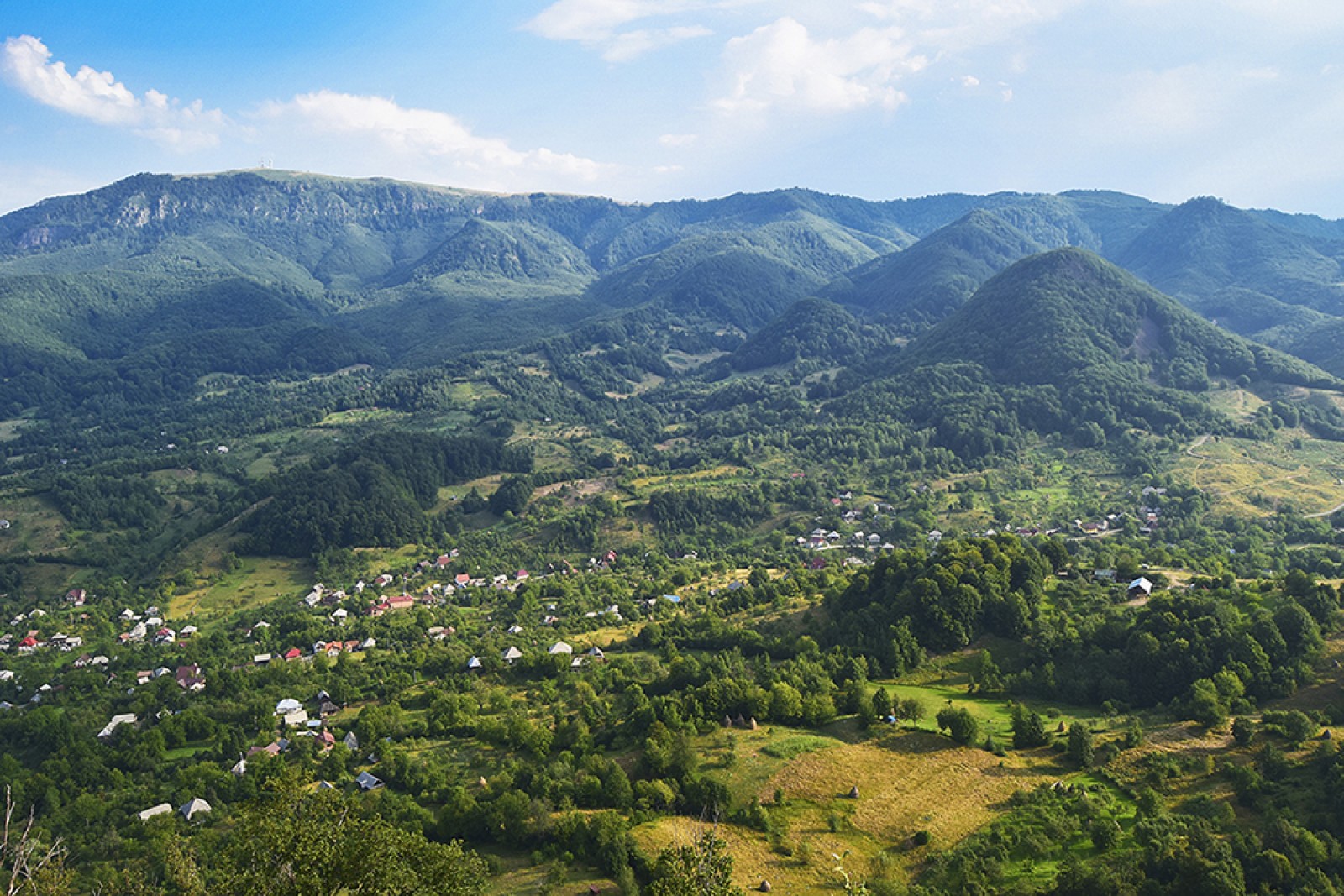
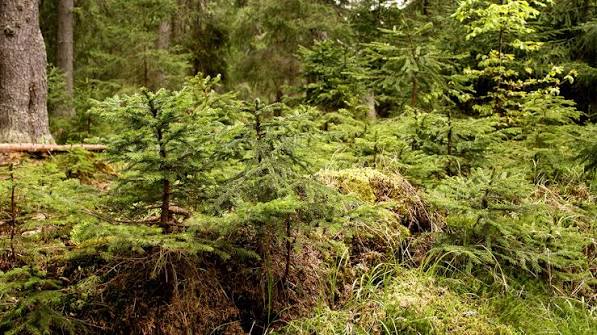
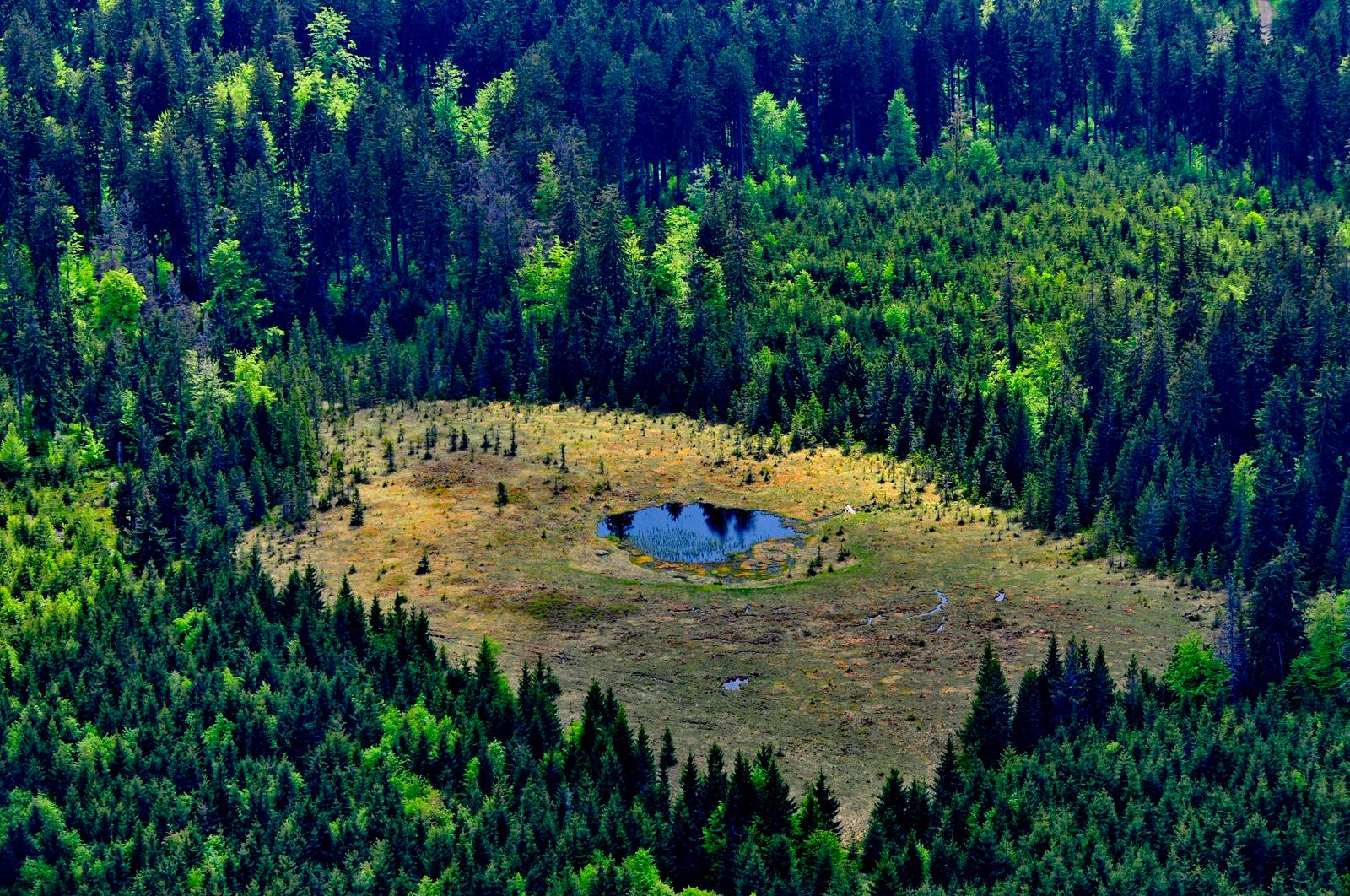
Tăul lui Dumitru is a protected area of national interest, a botanical nature reserve (IUCN category IV) in the north-central part of Maramureș County, in the Igniș Mountains. It was declared a protected area by Law no. 5 of 6 March 2000 and covers 3 hectares.
The reserve is an oligotrophic marshy complex — a raised peat bog of about 3 hectares, set in a beech and spruce forest at 1,130–1,200 m altitude. It is an active peat bog, circular in shape, formed in a Neogene volcanic crater.
It was designated in order to conserve the natural features of this wetland, preserve biodiversity and provide conditions for scientific research and ecological education.
What grows here
The bog is home to vegetation that seems borrowed from the far north of the continent: bog rosemary (Andromeda polifolia), cranberry (Vaccinium oxycoccus), bog bilberry (Vaccinium uliginosum), hare's-tail cottongrass (Eriophorum vaginatum) with its white tufts, and sedges — all growing on the carpet of peat moss (Sphagnum) that builds the whole structure, millimetre by millimetre.
These are plants left over from much colder times, which have survived here because the bog gives them what they need: acidic, nutrient-poor water and permanently waterlogged ground. That is why a peat bog is both a relic and an archive: the peat preserves the pollen of recent millennia, from which researchers can read how the surrounding forest has changed.
The reserve overlaps the Natura 2000 Igniș site and is protected under Law no. 5 of 2000.
Visiting responsibly
This is a protected area: stay on the path, don't pick plants or take anything out of the reserve, don't light fires and take your rubbish with you. Peat bogs are especially fragile — a trampled layer of moss takes decades to recover, and it is the living carpet on the surface that holds the whole ecosystem together. Don't leave the trail to get closer to the pools of open water.